Jean-Pierre Fouque, George Papanicolaou, Ronnie Sircar, Knut Solna
Volatility Perturbations in Financial Markets
300 pages
Hardback | ISBN: 0-521-84358-8 | available from April 2005
This book builds on previous and current research by the four
authors, including results introduced in the book Derivatives in
Financial Markets with Stochastic Volatility. Recent research
demonstrates that the introduction of two time scales in
volatility, a fast and a slow, is needed and efficient for
capturing the main features of the observed term structure of
implied volatility. For practitioners, the modeling of the
implied volatility consistent with no-arbitrage is crucial. The
authors present an approach to this problem which consists in
combining singular and regular perturbation techniques. The book
will serve a dual purpose: present ‘off the shelf’ formulas
and calibration tools for practitioners, and introduce, explain
and develop the mathematical framework to handle the multi-scale
asymptotics. Detailed presentation of the analysis as well as a
thorough insight into the modeling approach makes this an
excellent text for a second level graduate course in financial
and applied mathematics.
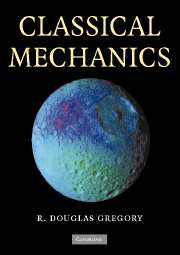
Douglas Gregory
Undergraduate Mechanics
 450 pages 100 line diagrams 100 exercises 100 worked examples
Hardback | ISBN: 0-521-82678-0 | available from April 2005
Paperback | ISBN: 0-521-53409-7 | available from April 2005
Mechanics is the study of the motion of physical objects. As
such, the subject finds its applications in all areas of physics
and engineering. This book provides a complete guide to
mechanics, necessary for any applied mathematics student. The
author has written a detailed account of classical analytical
mechanics that will appeal to the modern student aided by his
years of experience as a lecturer in the subject. Topics covered
include Newton’s, Lagrange’s and Hamilton’s equations of
motion, kinematics, oscillation, particle mechanics and rigid
body motion in two and three dimensions. A thorough understanding
of the theory is provided by supporting the classical laws of
motion with plenty of relevant examples and case studies. Matlab
code is also used to illustrate key ideas and solutions to
exercises are available to lecturers and course instructors.
Solutions to exercices are available from the Web.
Contents
1. Introduction; 2. Vectors - a summary; 3. Kinematics; 4.
Forces; 5. Equilibrium of a particle; 6. Rectilinear motion of a
particle; 7. Linear oscillations; 8. Particle motion in two and
three dimensions; 9. Constrained motion of a particle; 10.
Impulses; 11. Work and the energy principle; 12. Orbital motion
in a central field; 13. Equilibrium of a rigid body; 14. Planar
rigid body motion; 15. Dynamics of systems: the linear momentum
principle; 16. Dynamics of systems: the angular momentum
principle; 17. Three dimensional rigid body motion; 18. Rotating
reference frames; 19. Non-linear oscillations; 20. Lagrange’s
equations; 21. Normal modes of oscillation - the general theory;
22. Hamilton’s equations.
J. Woods Halley
Statistical Mechanics
Theory, Simulation and Experiment
280 pages 10 tables 50 exercises 25 figures
Hardback | ISBN: 0-521-82575-X | available from April 2005
This book describes the main ideas and methods that underlie the
application of statistical mechanics to a wide variety of fields
in science. It has a greater emphasis on the links between the
basic microscopic laws of classical and quantum physics and
statistical mechanics than can be found in other texts at the
same level. The book is organised into three parts. The first
section recounts basic lines of argument leading from microscopic
description to the standard equilibrium ensembles in classical
mechanics and quantum mechanics. The second section describes
applications of the equilibrium ensembles to systems of
progressively increasing density: ideal gases, imperfect gases (cluster
expansions), liquids, and solids, and finally phase transitions
and the renormalization group for the study of critical points.
The final section deals with dynamics, including a careful
account of the meaning of hydrodynamic theories in microscopic
terms and linear response theory.
Contents
Part I. Foundations of Equilibrium Statistical Mechanics: 1.
Classical distribution function; 2. Quantum mechanical density
matrix; 3. Thermodynamics from statistical physics; 4. The
semiclassical limit; Part II. States of Matter in Equilibrium
Statistical Physics: 5. Perfect gases; 6. Imperfect gases; 7.
Classical liquids; 8. Quantum liquids; 9. Magnetic systems; 10.
Phase transitions, static properties; Part III. Dynamics: 11.
Hydrodynamics and related continuum theories; 12. Linear response
theory; 13. Stochastic models; 14. Dynamics of critical phenomena.
Rebecca Hoyle
Nonlinear Patterns
250 pages 50 figures
Paperback | ISBN: 0-521-52076-2 | available from April 2005
Hardback | ISBN: 0-521-81750-1 | available from April 2005
Regular patterns are found in abundance in nature, from the spots
on a leopards back to the ripples on a sandy beach or desert dune.
There has a been a flurry of recent research activity seeking to
explain the appearance and evolution of such patterns. The
selection of one pattern over another has turned out to be an
inherently nonlinear phenomenon. This book is intended to provide
an introduction to the theory of nonlinear patterns for advanced
undergraduates and beginning graduate students. Readers will gain
a thorough grounding in the major techniques used to analze
pattern-forming systems. The book brings together the different
approaches used in describing pattern formation from group
theoretic methods to envelope equations and the theory of
patterns in large aspect-ratio systems, unifying them for perhaps
the first time in a textbook.
Contents
1. An introduction to natural patterns; 2. Elementary bifurcation
theory; 3. Group theoretic methods for bifurcation theory; 4.
Spatial modulation and envelope equations; 5. Secondary
instabilities of periodic patterns; 6. Large aspect ratio systems
and the Cross-Newell equations; 7. Defects and irregularities; 8.
Applications;
David Needham
An Introduction to Reaction-Diffusion Theory
320 pages
Paperback | ISBN: 0-521-53844-0 | available from May 2005
Hardback | ISBN: 0-521-83115-6 | available from May 2005
Rapidly developing research areas such as mathematical biology,
ecology, demography and chemistry often depend on underlying
theory from reaction and diffusion. Aimed at upper-undergraduate
and MSc students, this book provides a solid grounding in the
mathematical ideas involved, supplementing these with numerous
examples to illustrate their application.
Contents
Introduction; 1. The linear diffusion equation; 2. Reaction rate
equations and the scalar reaction-diffusion equation; 3.
Existence an Uniqueness; 4. Maximum principles and comparison
theorems; 5. Equilibrium states and stability; 6. Steady states
and stability; 7. Travelling waves; 8. Blow-up phenomena; 9. Non-linear
diffusion; 10. Singular reaction phenomena; 11. Reaction-diffusion
systems; 12. Asymptotic methods;
E. G. Puckett, P. Colella
Finite Difference Methods for Computational Fluid Dynamics
350 pages
Hardback | ISBN: 0-521-55500-0 | available from January 2005
Paperback | ISBN: 0-521-55531-0 | available from January 2005
Computational methods for fluid dynamics are now considered as a
reliable alternative to experimental techniques. The book
outlines the main solution methods and algorithms available to
those working on both compressible and incompressible flow
problems. Ideal as an upper-division textbook or as a reference
for CFD researchers and professionals.
Contents
Part I. Compressible Flow: 1. Finite difference methods for
linear scalar problems; 2. Nonlinear scalar problems; 3. Systems
of conservation laws; 4. Nonlinear systems of conservation laws;
Part II. Incompressible Flow: 5. Introduction; 6. The Poisson
equation; 7. The prototype advection equation; 8. The Navier-Stokes
equation.
Joseph I. Kapusta, Charles Gale
Finite-Temperature Field Theory
2nd Edition
350 pages 50 line diagrams 3 tables 100 exercises
Hardback | ISBN: 0-521-82082-0 | available from April 2005
Thoroughly revised and updated, this new edition develops the
basic formalism and theoretical techniques for studying
relativistic field theory at finite temperature and density. It
starts with the path-integral representation of the partition
function and then proceeds to develop diagrammatic perturbation
techniques. The standard model is discussed, along with the
nature of the phase transitions in strongly interacting systems
and applications to relativistic heavy ion collisions, dense
stellar objects, and the early universe. First Edition Hb (1989):
0-521-35155-3 First Edition Pb (1994): 0-521-44945-6
Contents
1. Review of quantum statistical mechanics; 2. Functional
integral representation of the partition function; 3.
Interactions and diagrammatic techniques; 4. Renormalisation; 5.
Quantum electrodynamics; 6. Linear response theory; 7.
Spontaneous symmetry breaking and restoration; 8. Quantum
chromodynamics; 9. Resummation and hard thermal loops; 10.
Lattice gauge theory; 11. Dense nuclear matter; 12. Hot hadronic
matter; 13. Nucleation theory; 14. Heavy ion collisions; 15. Weak
interactions; 16. Astrophysics and cosmology; Appendix.
Reviews
Praise for the 1st edition: ‘… a wonderfully compact book,
filled with useful information and important references.’ R.
Delbourgo, Mathematical Reviews