Brown, R.F.; Furi, M.; Gorniewicz, L.; Jiang, B. (Eds.)
Handbook of Topological Fixed Point Theory
2005, IX, 971 p., Hardcover
ISBN: 1-4020-3221-8
About this book
This book is the first in the world literature presenting all new
trends in topological fixed point theory. Until now all books
connected to the topological fixed point theory were devoted only
to some parts of this theory.
This book will be especially useful for post-graduate students
and researchers interested in the fixed point theory,
particularly in topological methods in nonlinear analysis,
differential equations and dynamical systems. The content is also
likely to stimulate the interest of mathematical economists,
population dynamics experts as well as theoretical physicists
exploring the topological dynamics.
Table of contents
Preface.
I. Homological Methods in Fixed Point Theory.
1. Coincidence theory. 2. On the Lefschetz fixed point theorem. 3.
Linearizations for maps of nilmanifolds and solvmanifolds. 4.
Homotopy minimal periods. 5. Perodic points and braid theory. 6.
Fixed point theory of multivalued weighted maps. 7. Fixed point
theory for homogeneous spaces ? a brief survey.
II. Equivariant Fixed Point Theory.
8. A note on equivariant fixed point theory. 9. Equivariant
degree. 10. Bifurcations of solutions of SO (2)-symmetric
nonlinear problems with variational structure.
III. Nielsen Theory.
11. Nielsen root theory. 12. More about Nielsen theories and
their applications. 13. Algebraic techniques for calculating the
Nielsen number on hyperbolic surfaces. 14. Fibre techniques in
Nielsen theory calculations. 15. Wecken theorem for fixed and
periodic points. 16. A primer of Nielsen fixed point theory. 17.
Nielsen fixed point theory on surfaces. 18. Relative Nielsen
theory.
IV. Applications.
19. Applicable fixed point principles. 20. The fixed point index
of the Poincare translation. 21. On the existence of equilibria
and fixed points of maps under constraints. 22. Topological fixed
point theory and nonlinear differential equations. 23. Fixed
point results based on the Wazeski method.
N. Balakrishnan McMaster University, Ontario, Canada
I. G Bairamov Izmir University of Economics, Ismir, Balcova,
Turkey
O. L Gebizlioglu Ankara University, Ankara, Tandogan, Turkey
Advances on Models, Characterizations and Applications
Series: Statistics: Textbooks and Monographs Volume: 180
ISBN: 0-8247-4022-X
Publication Date: 5/31/2005
Number of Pages: 256
Comprises self-contained chapters contributed by world-renowned
authorities
Presents an up-to-date exposition of the recent developments in
important properties of statistical distributions
Covers advances on inferential procedures for several
distributions and models
Relates these advances to real-world applications and problems
Statistical distributions are one of the most important applied
mathematical tools across a wide spectrum of disciplines,
including engineering, biological sciences, and health and social
sciences. Since they are used to model observed data and
ultimately to develop inferential procedures, understanding the
properties of statistical distributions is critical to developing
optimal inferential methods and validating the resulting model
assumptions. Advances on Models, Characterizations and
Applications offers up-to-date information on many recent
developments in the field.
Comprising fourteen self-contained chapters contributed by
internationally renowned experts, this book delineates recent
developments on characterizations and other important properties
of several distributions, inferential issues related to these
models, and several applications of the models to real-world
problems. Each chapter is rich with references for further study
or more in-depth information on each topic and reflects work
presented at the International Conference on Advances on
Characterizations, Models, and Applications held in Antalya,
Turkey in December 2001.
Advances on Models, Characterizations and Applications provides
an updated account of important properties of statistical
distributions that reflects their deep importance and broad
application and is a welcome addition to the literature.
Table of Contents
Richard A Mollin Calgary, Alberta, Canada
Codes: The Guide to Secrecy From Ancient to Modern Times
Series: Discrete Mathematics and Its Applications Volume: 33
ISBN: 1-58488-470-3
Publication Date: 5/24/2005
Number of Pages: 704
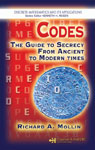 Presents self-contained, thorough, and vibrantly illustrated coverage accessible to both professionals and laypersons
Provides an intuitive approach with illustrations to provide an
overview of the topics for the general reader that does not
require a mathematical approach
Incorporates more than 200 footnotes and 300 references for
access to more in-depth information and further reading
Contains all necessary mathematics, requisite probability theory,
and exercises organized by chapter in the appendices
From the Rosetta Stone to public-key cryptography, the art and
science of cryptology has been used to unlock the vivid history
of ancient cultures, to turn the tide of warfare, and to thwart
potential hackers from attacking computer systems. Codes: The
Guide to Secrecy from Ancient to Modern Times explores the depth
and breadth of the field, remaining accessible to the uninitiated
while retaining enough rigor for the seasoned cryptologist.
The book begins by tracing the development of cryptology from
that of an arcane practice used, for example, to conceal alchemic
recipes, to the modern scientific method that is studied and
employed today. The remainder of the book explores the modern
aspects and applications of cryptography, covering symmetric- and
public-key cryptography, cryptographic protocols, key management,
message authentication, e-mail and Internet security, and
advanced applications such as wireless security, smart cards,
biometrics, and quantum cryptography. The author also includes
non-cryptographic security issues and a chapter devoted to
information theory and coding. Nearly 200 diagrams, examples,
figures, and tables along with abundant references and exercises
complement the discussion.
Written by leading authority and best-selling author on the
subject Richard A. Mollin, Codes: The Guide to Secrecy from
Ancient to Modern Times is the essential reference for anyone
interested in this exciting and fascinating field, from novice to
veteran practitioner.
Table of contents
Oleg Emanouvilov Iowa State University, Ames, USA
Guenter Leugering Tech Universitat Darmstadt, Germany
Roberto Triggiani University of Virginia, Charlottesville, USA
Bing-Yu Zhang University of Cincinnati, Ohio, USA
Control Theory of Partial Differential Equations
Series: Lecture Notes in Pure and Applied Mathematics Volume:
242
ISBN: 0-8247-2546-8
Publication Date: 5/27/2005
Number of Pages: 416
Availability: In Stock
Presents the state-of-the-art in control theory for partial
differential equations
Combines contributions from international leaders in the field
Covers recent developments, new discoveries and tools, and
challenging open problems
Contains modeling and analysis of applied mathematics topics,
such as networks of canals, aircraft wing modeling, poro-elastic
filtration coupled to Stokes flows, and axially moving tapes
The field of control theory in PDEs has broadened considerably as
more realistic models have been introduced and investigated. This
book presents a broad range of recent developments, new
discoveries, and mathematical tools in the field. The authors
discuss topics such as elasticity, thermo-elasticity, aero-elasticity,
interactions between fluids and elastic structures, and fluid
dynamics and the new challenges that they present. Other control
theoretic problems include parabolic systems, dynamical Lame
systems, linear and nonlinear hyperbolic equations, and pseudo-differential
operators on a manifold. This is a valuable tool authored by
international specialists in the field.
Table of contents
Fionn Murtagh Royal Holloway University of London, UK
Correspondence Analysis and Data Coding with Java and R
Series: Chapman & Hall/CRC Computer Science & Data
Analysis Volume: 4
ISBN: 1-58488-528-9
Publication Date: 5/26/2005
Number of Pages: 256
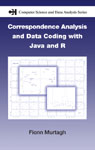 Introduces the theory, methods, and applications of correspondence analysis,
with an emphasis on data coding
Introduces the theory, methods, and applications of correspondence analysis,
with an emphasis on data coding
Exemplifies the importance of correspondence analysis in areas
such as the analysis of time-evolving data and the analysis of
text
Includes applications to financial and other time series analysis
Offers full discussion of software code in both Java and R
Provides software and data sets used in the book on a supporting
web site: www.correspondances.info
Developed by Jean-Paul Benzerci more than 30 years ago,
correspondence analysis as a framework for analyzing data quickly
found widespread popularity in Europe. The topicality and
importance of correspondence analysis continue, and with the
tremendous computing power now available and new fields of
application emerging, its significance is greater than ever.
Correspondence Analysis and Data Coding with Java and R clearly
demonstrates why this technique remains important and in the eyes
of many, unsurpassed as an analysis framework. After presenting
some historical background, the author presents a theoretical
overview of the mathematics and underlying algorithms of
correspondence analysis and hierarchical clustering. The focus
then shifts to data coding, with a survey of the widely varied
possibilities correspondence analysis offers and introduction of
the Java software for correspondence analysis, clustering, and
interpretation tools. A chapter of case studies follows, wherein
the author explores applications to areas such as shape analysis
and time-evolving data. The final chapter reviews the wealth of
studies on textual content as well as textual form, carried out
by Benzecri and his research lab. These discussions show the
importance of correspondence analysis to artificial intelligence
as well as to stylometry and other fields.
This book not only shows why correspondence analysis is
important, but with a clear presentation replete with advice and
guidance, also shows how to put this technique into practice.
Downloadable software and data sets allow quick, hands-on
exploration of innovative correspondence analysis applications.
Table of contents
SANZ-SOLE,M.
Malliavin Calculus with Applications to Stochastic Partial
Differential Equations
ISBN: 0-8493-4030-6
Publication Date: 6/30/2005
Number of Pages: 150
Presents applications of Malliavin calculus to the analysis of
probability laws of solutions of stochastic partial differential
equations
Introduces this type of calculus based on Gaussian space
Includes finite-dimensional and infinite-dimensional settings
Addresses applications based on recent research
Presented in a comprehensive way, A Course on Malliavin Calculus
with Applications to Stochastic Partial Differential Equations
describes applications of Malliavin calculus to the analysis of
probability laws of solutions of stochastic partial differential
equations, driven by Gaussian noises that are white in time and
colored in space. The text begins with an introduction to this
type of calculus based on a general Gaussian space, from finite-dimensional
to infinite-dimensional settings. The book later presents
applications to stochastic partial differential equations based
on current research, supplemented by comments concerning the
origin of the work developed within and its references.
Table of Contents
Introduction. Integration by Parts and Absolute Continuity of
Probability Laws. Finite Dimensional Malliavin Calculus. The
Basic Operators of Malliavin Calculus. Representation of Wiener
Functionals. Criteria for Absolute Continuity and Smoothness of
Probability Laws. Stochastic Partial Differential Equations
driven by Spatially Homogenous Gaussian Noise. Malliavin
Regularity of Solutions of SPDEs. Analysis of the Malliavin
Matrix of Solutions of SPDEs. Definition of Spaces Used
Throughout the Course.