Editors: Andrzej Wieczorek, Marcin Malawski and Agnieszka Wiszniewska-Matyszkiel
Game Theory and Mathematical Economics
BANACH CENTER PUBLICATIONS Volume 71
Contents
Preface
The existence of globally stable price mechanisms for pure
exchange models with upper semicontinuous multivalued excess
demand
Aleksandra Arkit
Banach Center Publ. 71 (2006), 15-28
On Newton's polygons, Grobner bases and series expansions of
perturbed polynomial programs
Konstantin Avrachenkov, Vladimir Ejov, Jerzy A. Filar
Banach Center Publ. 71 (2006), 29-38
The equal split-off set for cooperative games
Rodica Branzei, Dinko Dimitrov, Stef Tijs
Banach Center Publ. 71 (2006), 39-46
Arrow-Hahn economic models with weakened conditions of continuity
Inese Bula, Dace Rika
Banach Center Publ. 71 (2006), 47-61
Forecast horizon and planning horizon paths in time-indexed
network
Stanis?aw Bylka
Banach Center Publ. 71 (2006), 63-82
Convexity of production, common pool and oligopoly games: a
survey
Theo S. H. Driessen, Holger Meinhardt
Banach Center Publ. 71 (2006), 83-92
On infinite horizon multi-person stopping games with priorities
E. Z. Ferenstein
Banach Center Publ. 71 (2006), 93-102
Production games, core deficit, duality and shadow prices
Sjur Didrik Flam
Banach Center Publ. 71 (2006), 103-114
Core solutions and nash equilibria in noncooperative games with a
measure space of players
Sjur Didrik Flam, Andrzej Wieczorek
Banach Center Publ. 71 (2006), 115-123
Oligopoly equilibrium in pure exchange economies
J. J. Gabszewicz
Banach Center Publ. 71 (2006), 125-135
A game-theoretical model of competition for staff between two
departments
A. Y. Garnaev
Banach Center Publ. 71 (2006), 137-145
Bilateral sequential bargaining with perfect information and
different protocols
Robert Gola?ski
Banach Center Publ. 71 (2006), 147-161
Demand continuity and equilibrium in Banach commodity spaces
Anthony Horsley, A. J. Wrobel
Banach Center Publ. 71 (2006), 163-183
Recognition rules in weighted majority games and their
implications
Krzysztof Kasprzyk
Banach Center Publ. 71 (2006), 185-194
An axiomatization of the aspiration core
Hans Keiding
Banach Center Publ. 71 (2006), 195-204
Growth model with migration: structure of optimal saving rates
Robert Kruszewski
Banach Center Publ. 71 (2006), 205-212
Open topics in fuzzy coalitional games with transferable utility
Milan Mare?
Banach Center Publ. 71 (2006), 213-225
Core equivalence in economy under awareness
Takashi Matsuhisa
Banach Center Publ. 71 (2006), 227-235
Equilibrium transitions in finite populations of players
J. Mi?kisz
Banach Center Publ. 71 (2006), 237-242
Von Neumann models and the oeuvre of Jerzy ?o?
Otto Moeschlin
Banach Center Publ. 71 (2006), 243-252
Correlated equilibria in competitive staff selection problem
David M. Ramsey, Krzysztof Szajowski
Banach Center Publ. 71 (2006), 253-265
Four different approaches to the normalized Banzhaf values of
games with a priori unions
Honorata Sosnowska
Banach Center Publ. 71 (2006), 267-273
A graph-theoretic characterization of the core in a homogeneous
generalized assignment game
Tadeusz Soza?ski
Banach Center Publ. 71 (2006), 275-290
Existence of nash equilibria in two-person stochastic games of
resource extraction
P. Szajowski
Banach Center Publ. 71 (2006), 291-302
Serial cost sharing
Elena Yanovskaya
Banach Center Publ. 71 (2006), 303-315
Solidarity and cooperative bargaining solutions
Naoki Yoshihara
Banach Center Publ. 71 (2006), 317-330
Ngai Hang Chan, Hoi-Ying Wong
Simulation Techniques in Financial Risk Management
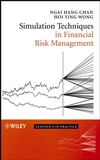 ISBN: 0-471-46987-4
Hardcover
240 pages
April 2006
This unique resource provides simulation techniques for financial
risk managers ensuring you become well versed in many recent
innovations, including Gibbs sampling, the use of heavy-tailed
distributions in VaR calculations, construction of volatility
smile, and state space modeling. The authors illustrate key
concepts with examples and case studies you can reproduce using
either S-PLUS or Visual Basic and provide exercises so you can
apply new concepts and test your knowledge.
Simulation Techniques in Financial Risk Management is invaluable
both as a resource for risk managers in the financial and
actuarial industries and as a coursebook for upper-level
undergraduate and graduate courses in simulation and risk
management.
Contents
Isaac Barrow / J. M. Child
The Geometrical Lectures of Isaac Barrow
 ISBN: 0486450813
Page Count: 240
Dimensions: 5 5/8 x 8 1/2
These lectures by Newton's teacher offer a systematic and
detailed treatment of tangents, arcs, areas, and related subjects.
He stated the main aims of these lectures as the investigation of
tangents without the bother of calculation and the quick
determination of the dimensions of many magnitudes by means of
their tangents.
Dani Gamerman University Federal Do Rio de Janeiro, Brazil
Hedibert F. Lopes University of Chicago, Illinois, USA
Markov Chain Monte Carlo:
Stochastic Simulation for Bayesian Inference, Second Edition
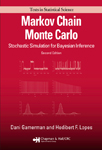 Series: Texts in Statistical Science Series Volume: 69
ISBN: 1584885874
Publication Date: 5/10/2006
Number of Pages: 344
Covers techniques used to perform Bayesian inference based on
stochastic simulation
Presents basic, direct simulation operations for those not
familiar with them
Provides an understanding of the properties of Markov chains and
the relevant results
Discusses Gibbs sampling and includes examples of a number of
situations including models with hierarchical structure, models
for spatial data and models with a dynamic setting
Explores the Gibbs sampling and Metropolis-Hastings algorithms
and presents numerical comparisons
Includes coverage of alternative models that can be used as
auxiliary devices in designing a MCMC method for a particular
model
While there have been few theoretical contributions on the Markov
Chain Monte Carlo (MCMC) methods in the past decade, current
understanding and application of MCMC to the solution of
inference problems has increased by leaps and bounds.
Incorporating changes in theory and highlighting new
applications, Markov Chain Monte Carlo: Stochastic Simulation for
Bayesian Inference, Second Edition presents a concise,
accessible, and comprehensive introduction to the methods of this
valuable simulation technique. The second edition includes access
to an internet site that provides the code, written in R and
WinBUGS, used in many of the previously existing and new examples
and exercises. More importantly, the self-explanatory nature of
the codes will enable modification of the inputs to the codes and
variation on many directions will be available for further
exploration.
Major changes from the previous edition:
* More examples with discussion of computational details in
chapters on Gibbs sampling and Metropolis-Hastings algorithms
* Recent developments in MCMC, including reversible jump, slice
sampling, bridge sampling, path sampling, multiple-try, and
delayed rejection
* Discussion of computation using both R and WinBUGS
- Additional exercises and selected solutions within the text,
with all data sets and software available for download from the
Web
* Sections on spatial models and model adequacy
The self-contained text units make MCMC accessible to scientists
in other disciplines as well as statisticians. The book will
appeal to everyone working with MCMC techniques, especially
research and graduate statisticians and biostatisticians, and
scientists handling data and formulating models. The book has
been substantially reinforced as a first reading of material on
MCMC and, consequently, as a textbook for modern Bayesian
computation and Bayesian inference courses.
Table of Contents
Gregory F. Lawler Cornell University, Ithaca, New York, USA
Introduction to Stochastic Processes, Second Edition
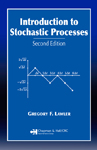 ISBN: 158488651X
Publication Date: 5/16/2006
Number of Pages: 248
Emphasizes the relationship between convergence to equilibrium
and the size of the eigenvalues of the stochastic matrix
Discusses the Poisson process, finite state space, and birth-and-death
processes using forward differential equations to describe the
evolution of the probabilities
Supplies a solid introduction to martingales that includes a
discussion of optional sampling and the martingale convergence
theorem and their proofs
Includes current topics in the realm of reversible Markov chains
and introduces Markov chain algorithms important to some areas of
physics, computer science, and statistics
Presents an introduction to Brownian motion, both
multidimensional and one-dimensional
Introduces stochastic integration with application to
mathematical finance
Emphasizing fundamental mathematical ideas rather than proofs,
Introduction to Stochastic Processes, Second Edition provides
quick access to important foundations of probability theory
applicable to problems in many fields. Assuming that you have a
reasonable level of computer literacy, the ability to write
simple programs, and the access to software for linear algebra
computations, the author approaches the problems and theorems
with a focus on stochastic processes evolving with time, rather
than a particular emphasis on measure theory.
For those lacking in exposure to linear differential and
difference equations, the author begins with a brief introduction
to these concepts. He proceeds to discuss Markov chains, optimal
stopping, martingales, and Brownian motion. The book concludes
with a chapter on stochastic integration. The author supplies
many basic, general examples and provides exercises at the end of
each chapter.
New to the Second Edition:
* Expanded chapter on stochastic integration that introduces
modern mathematical finance
* Introduction of Girsanov transformation and the Feynman-Kac
formula
* Expanded discussion of It・s formula and the Black-Scholes
formula for pricing options
* New topics such as Doob's maximal inequality and a discussion
on self similarity in the chapter on Brownian motion
Applicable to the fields of mathematics, statistics, and
engineering as well as computer science, economics, business,
biological science, psychology, and engineering, this concise
introduction is an excellent resource both for students and
professionals.
Table of Contents
Grimmett, Geoffrey
The Random-Cluster Model
 Series: Grundlehren der mathematischen Wissenschaften , Vol.
333
Series: Grundlehren der mathematischen Wissenschaften , Vol.
333
2006, XIV, 380 p., 37 illus., Hardcover.
ISBN: 3-540-32890-4
About this book
The random-cluster model has emerged in recent years as a key
tool in the mathematical study of ferromagnetism. It may be
viewed as an extension of percolation to include Ising and Potts
models, and its analysis is a mix of arguments from probability
and geometry. This systematic study includes accounts of the
subcritical and supercritical phases, together with clear
statements of important open problems. There is an extensive
treatment of the first-order (discontinuous) phase transition, as
well as a chapter devoted to applications of the random-cluster
method to other models of statistical physics.
Written for:
Researchers and graduate students in probability theory,
statistical physics, and mathematical physics
Table of contents