Collet, Pierre, Eckmann, Jean Pierre
Concepts and Results in Chaotic Dynamics: A Short Course
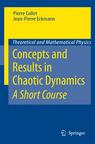 Series: Theoretical and Mathematical Physics
2006, Approx. 240 p., 50 illus., 20 in colour, Hardcover.
ISBN: 3-540-34705-4
Due: September 19, 2006
About this textbook
The study of dynamical systems is a well established field.
Having given graduate-level courses on the subject for many
years, the authors have now written this book to provide a
panorama of the aspects that are of interest to mathematicians
and physicists alike.
Avoiding belaboured proofs, the exposition concentrates instead
on abundant illustrations and examples, while still retaining
sufficient mathematical precision. Besides the standard topics of
the field, questions of physical measurement and stochastic
properties of chaotic dynamical systems are given much attention.
Written for:
Graduate students in mathematics, physics, and natural sciences
Table of contents
A Basic Problem.- Dynamical Systems.- Topological Properties.-
Hyperbolicity.- Invariant Measures.- Entropy.- Statistics and
Statistical Mechanics.- Other Probabilistic Results.-
Experimental Aspects.- References.- Index
Pham, Hoang (Ed.)
Springer Handbook of Engineering Statistics
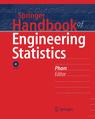 2006,.
ISBN: 1-84628-451-1
Due: July 2006
About this book
Engineers and practitioners contribute to society through their
ability to apply basic scientific principles to real problems in
an effective and efficient manner. They must collect data to test
their products every day as part of the design and testing
process and also after the product or process has been rolled out
to monitor its effectiveness. Model building, data collection,
data analysis and data interpretation form the core of sound
engineering practice.
After the data has been gathered the engineer must be able to
sift them and interpret them correctly so that meaning can be
exposed from a mass of undifferentiated numbers or facts. To do
this he or she must be familiar with the fundamental concepts of
correlation, uncertainty, variability and risk in the face of
uncertainty.
In today’s global and highly competitive environment,
continuous improvement in the processes and products of any field
of engineering is essential for survival. Many organisations have
shown that the first step to continuous improvement is to
integrate the widespread use of statistics and basic data
analysis into the manufacturing development process as well as
into the day-to-day business decisions taken in regard to
engineering processes.
The Springer Handbook of Engineering Statistics gathers together
the full range of statistical techniques required by engineers
from all fields to gain sensible statistical feedback on how
their processes or products are functioning and to give them
realistic predictions of how these could be improved.
The handbook will be essential reading for all engineers and
engineering-connected managers who are serious about keeping
their methods and products at the cutting edge of quality and
competitiveness.
Table of contents
Radulescu, Vicentiu D.; Niculescu, Constantin P. (Eds.)
Mathematical Analysis and Applications
International Conference on Mathematical Analysis and Applications Craiova,
Romania, 23-24 September 2005
Series: AIP Conference Proceedings
Subseries: Mathematical and Statistical Phsyics , Vol. 835
2006, 176 p., Hardcover.
ISBN: 0-7354-0328-7
About this book
The papers in these proceedings were peer-reviewed. The topics of
these papers are at the interface between mathematical physics,
numerical analysis, optimal control, and calculus of variations.
They include nonlinear analysis and partial differential
equations as well as classical mathematical analysis and
dynamical systems.
Written for:
Researchers in applied mathematics, nonlinear analysis, and
mathematical physics, as well as graduate students in mathematics
and physics
Keywords:
Mathematical physics
boundary value problems
critical point theory
maximum principle
nonlinear partial differential equations
nonsmooth analysis
optimal control
singularities
variational inequality Print version
Recommend to others
Skjeltorp, Arne T.; Belushkin, Alexander V. (Eds.)
Dynamics of Complex Interconnected Systems: Networks and
Bioprocesses
Proceedings of the NATO Advanced Study Institute on Dynamics of
Complex Interconnected Biosensor Systems: Networks and
Bioprocesses, Geilo, Norway, 11-21 April 2005.
 Series: NATO Science Series II: Mathematics, Physics and
Chemistry , Vol. 232
Series: NATO Science Series II: Mathematics, Physics and
Chemistry , Vol. 232
2006, Approx. 220 p., Softcover
ISBN: 1-4020-5029-1
Hardcover.
ISBN: 1-4020-5028-3
Due: August 2006
About this book
The book reviews the synergism between various fields of research
that are confronted with networks, like genetic and metabolic
networks, social networks, the Internet and ecological systems.
In many cases, the interacting networks manifest so-called
emergent properties that are not possessed by any of the
individual components. This means that the detailed knowledge of
the components is insufficient to describe the whole system.
Recent work has indicated that networks in nature have so-called
scale-free characteristics, and the associated dynamic network
modelling shows unexpected results such as an amazing robustness
against accidental failures. Modelling the signal transduction
networks in bioprocesses as in living cells is a challenging
interdisciplinary research area. It is now realized that the many
features of molecular interaction networks within a cell are
shared to a large degree by the other complex systems mentioned
above, such as the Internet, computer chips and society. Thus
knowledge gained from the study of complex non-biological systems
can be applied to the intricate braided relationships that govern
cellular functions.
The authors include theoretical physicists, soft condensed matter
experimentalists, biological physicists, and molecular biologists
and leaders in their respective fields, presenting in a
pedagogical manner the current experimental and theoretical
situation.
Table of contents
Smirnov, Vladimir A.
Feynman Integral Calculus
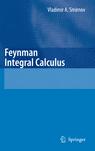 2006, Approx. 295 p., 52 illus., Hardcover.
ISBN: 3-540-30610-2
Due: August 2, 2006
About this textbook
This book offers a comprehensive review of tools to calculate and
interpret Feynman integrals, particularly those used for recent,
quite sophisticated calculations. These are illustrated with
numerous examples, starting from very simple ones and progressing
to nontrivial examples. This textbook version of the author’s
previous work ("Evaluating Feynman Integrals, STMP 211"),
aimed at graduate students, includes problems and separate
solutions. A new Appendix G has been added in this edition, more
details are presented and recent publications on evaluating
Feynman integrals are taken into account. The bibliography has
also been updated.
Table of contents
Introduction.- Feynman Integrals: Basic Definitions and Tools.-
Evaluating by Alpha and Feynman Parameters.- Evaluating by MB
Representation.- IBP and Reduction to Master Integrals.-
Reduction to Master Integrals by Baikov's Method.- Evaluating by
Differential Equations.- Appendix A: Tables.- Appendix B: Some
Special Functions.- Appendix C: Summation Formulae.- Appendix D:
Table of MB integrals.- Appendix E: Analysis of Convergence and
Sector Decompositions.- Appendix F: A brief Review of some other
Methods.- Appendix G: Applying Grobner Bases to Solve IBP
Relations.- Solutions.